The quick version
Smart glasses 2026 could be the year the category stops feeling like a sci-fi demo and starts becoming genuinely useful.
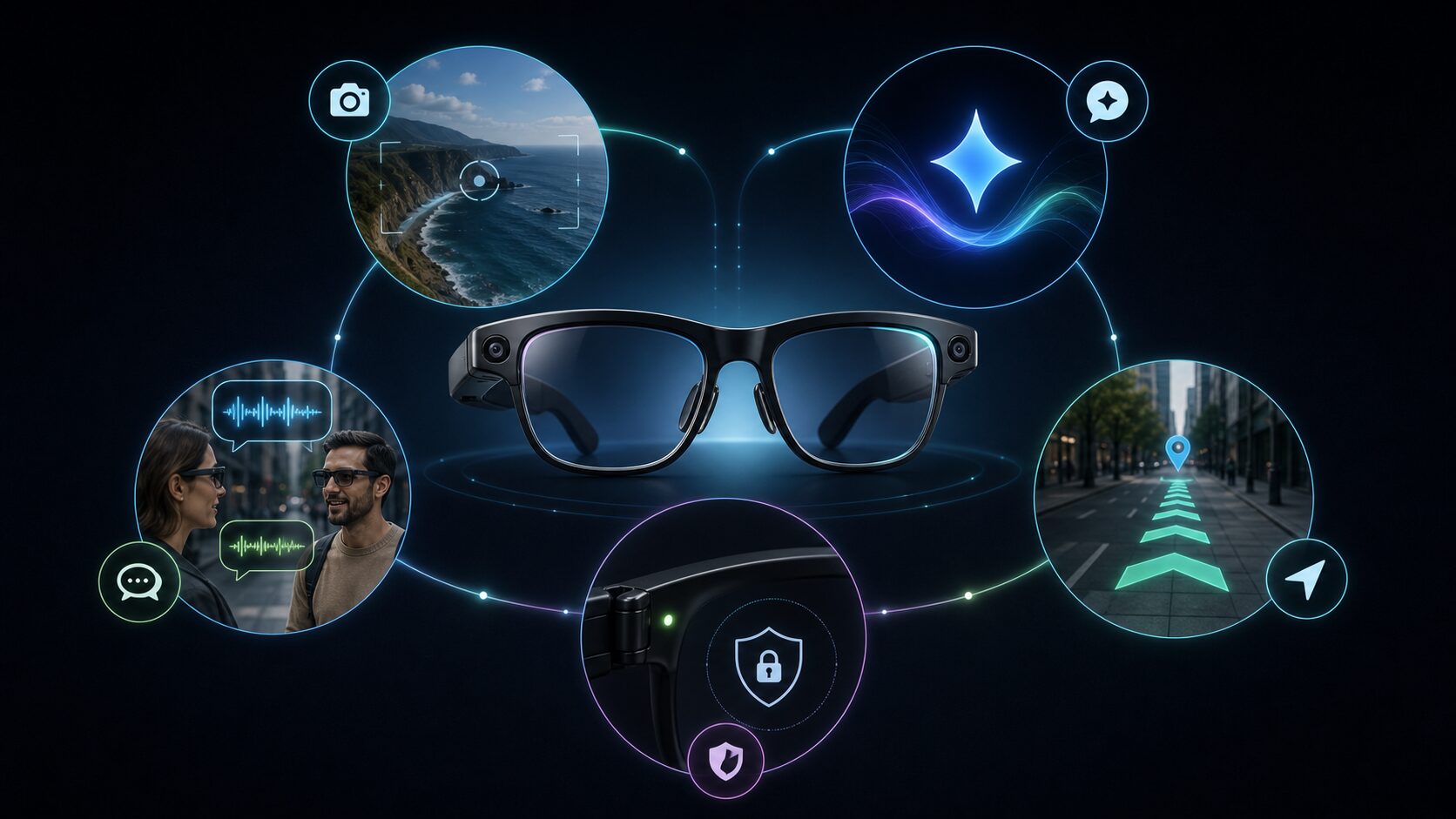
The reason is not one magic pair of glasses. It is the combination of better cameras, lighter frames, AI assistants, live translation, walking navigation, phone integration and platforms like Android XR. Meta already sells AI glasses in the UK, Google has teased Android XR glasses launching later this year, and Google I/O 2026 is likely to push the category harder.
That does not mean everyone should buy a pair tomorrow. Smart glasses still have big questions around privacy, battery life, camera etiquette, price and whether people actually want AI sitting on their face all day. Tiny detail, that.
Quick summary
- Smart glasses 2026 are becoming more practical because AI assistants make hands-free devices more useful.
- Meta already sells AI glasses through Ray-Ban Meta and Oakley Meta lines.
- Google says Android XR is coming to smart glasses, with Gemini support for navigation, translation and everyday assistance.
- Google has told people to tune into I/O for a glasses sneak peek, so more details may arrive soon.
- The best uses are hands-free camera capture, voice assistance, translation, walking directions and quick notifications.
- The biggest risks are privacy, recording etiquette, battery life, pricing and patchy feature availability.
- Most people should watch the category closely, but only buy if the use case is obvious.
You know the use case
You want hands-free camera capture, voice assistance, translations or calls without constantly pulling out your phone.
You want display glasses
If you want proper AR overlays, Android XR details and launch products are worth waiting for.
You dislike wearable cameras
If recording etiquette or battery life already worries you, this category is not ready to win you over yet.
1. AI gives smart glasses a reason to exist
The first wave of smart glasses often felt like cameras with eyewear attached. That was interesting, but not enough for most people.
Smart glasses 2026 have a clearer pitch because AI assistants make hands-free hardware more useful. If glasses can answer questions, summarise messages, translate speech, describe what you are looking at, help with directions or capture moments quickly, they start to make more sense as an everyday device.
This is why Meta and Google matter. Meta already markets AI glasses around connection, capture and assistance. Google is building Android XR around Gemini, and its Android XR page shows examples of AI understanding what you see and hear in the real world.
The clever bit is not “AI in glasses” as a slogan. It is whether the assistant helps at the exact moment your hands are busy and your phone would be annoying to use.
2. Meta has made the category feel more normal
Meta’s biggest achievement with Ray-Ban Meta and Oakley Meta glasses is not just the tech. It is making smart glasses look like glasses.
That sounds basic, but it matters. Wearables only work if people actually want to wear them. Meta’s UK AI glasses page lists the category from £299, with sale pricing shown from £224.25 at the time checked, which puts them closer to premium headphones than experimental developer hardware.
The useful features are straightforward: hands-free photos and video, audio, calls, livestreaming, Meta AI and a charging case. For some people, especially parents, creators, travellers and cyclists, that can be enough.
The limitation is just as clear. These are not full AR glasses with a rich display in front of your eyes. They are more like camera/audio/AI glasses. That is a real product, but it is not the same as the sci-fi version people imagine.
3. Android XR could raise expectations
Google’s Android XR work is where smart glasses 2026 gets more interesting.
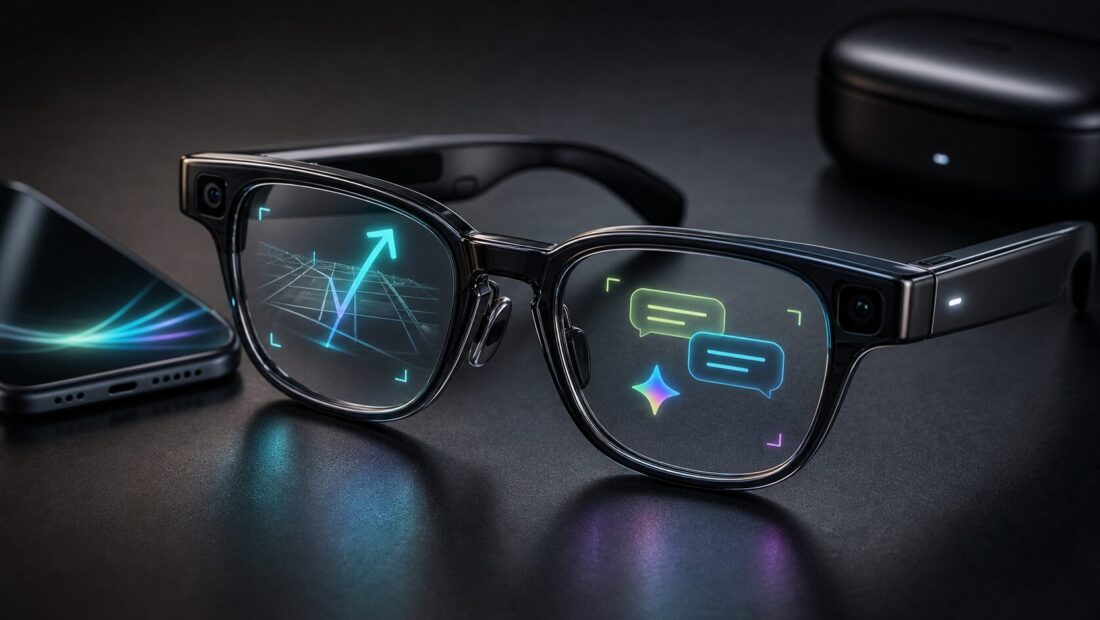
Android XR is Google’s platform for headsets and smart glasses. The official Android XR page frames glasses around Gemini assistance, real-time translation, walking navigation and information that responds to the world around you.
That is more ambitious than just taking a photo from your face. If Android XR glasses can combine a lightweight frame, useful display, Gemini, Maps, Translate, notifications and phone integration, the category changes shape.
The big caveat is timing. Google says smart glasses are coming, and the Android Show told people to tune into I/O for a sneak peek at glasses launching later this year. Until products, prices and supported countries are confirmed, this is still a roadmap story.
4. Translation could be the feature that sells the idea
Live translation is one of the easiest smart glasses features to understand.
Holding up a phone to translate a menu or conversation works, but it is awkward. Glasses could make that interaction more natural: listen, translate, and show or speak the result without forcing you to stare down at a screen.
This is also a good example of where AI glasses are genuinely different from a phone. Phones are great general-purpose devices. Glasses are better when the information needs to sit close to what you are seeing or hearing.
The watch-out is reliability. Translation is not something you want to be roughly right if you are dealing with travel, health, legal or work situations. Smart glasses need clear confidence, correction and fallback options.
5. Navigation is another obvious win
Walking directions are another strong use case.
Phone navigation is useful, but constantly checking a map while walking through an unfamiliar city is clumsy. A subtle arrow, distance cue or spoken instruction through glasses could feel much calmer.
Android XR’s examples include route guidance and location information through glasses. That is the kind of feature that could make wearable displays feel practical instead of gimmicky.
Again, subtlety matters. Nobody wants a billboard in their vision. The best version of smart glasses navigation is quiet, glanceable and easy to dismiss.
6. Privacy is the problem that will not go away
Smart glasses have one problem that no spec sheet can solve by itself: people do not always like cameras on faces.
Recording lights, clear controls, audible cues and obvious capture indicators all help. But social trust matters too. If people around the wearer cannot tell whether they are being recorded, the product will feel uncomfortable no matter how clever the AI is.
This is where companies need to be more boring, in a good way. Explain what is recorded, when recording starts, where data is stored, how AI processing works, and what controls exist. Make the privacy signals obvious enough for other people, not just the person wearing the glasses.
The category will not go mainstream on features alone. It needs etiquette.
7. Battery life and comfort decide everything
Smart glasses live or die by boring hardware details.
If they are too heavy, people stop wearing them. If the battery barely lasts, people stop trusting them. If the charging case is bulky, people leave it at home. If the frame styles are limited, people choose normal glasses instead.
That is why the next year matters. The category does not only need better AI. It needs better fit, lighter designs, prescription options, durable hinges, clear audio, stronger cameras, better heat management and batteries that survive real use.
This is where smart glasses are different from phones. A slightly chunky phone can still live in a pocket. A slightly annoying pair of glasses sits on your face. There is much less room for compromise.
Smart glasses vs phones: what changes?
Smart glasses will not replace phones in 2026. The better question is what they can do without making you reach for a phone.
Best for quick context
Useful for capture, directions, translation, calls and lightweight AI help while your hands are busy.
Best for full control
Still better for reading, editing, payments, apps, privacy checks and anything that needs a proper screen.
Both working together
The winning version is glasses for fast moments and the phone for review, settings, editing and deeper tasks.
SignalTrove take
Smart glasses 2026 feel different because the category finally has a reason beyond novelty.
AI makes glasses more useful. Cameras make them more immediate. Translation and navigation make them easier to explain. Android XR could give the whole thing a proper platform. Meta has already shown that people may accept the idea if the glasses look normal enough.
But “finally useful” does not mean “ready for everyone”. Privacy, comfort, pricing, battery life and social awkwardness are still very real. The smart move is to treat 2026 as the year smart glasses become worth watching closely, not necessarily the year everyone needs a pair.
If Google shows convincing Android XR glasses around Google I/O, this could get lively fast. Our Google I/O 2026 preview and Android Show roundup are the two stories to keep next to this one.
FAQ
Are smart glasses worth buying in 2026?
Smart glasses are worth considering in 2026 if you have a clear use case, such as hands-free camera capture, calls, translation, walking navigation or AI assistance. They are not yet an obvious buy for everyone.
What are the best smart glasses in 2026?
The most visible consumer options include Meta’s AI glasses, such as Ray-Ban Meta and Oakley Meta. Android XR smart glasses are also worth watching as Google and partners reveal more details.
Do smart glasses replace a phone?
No. Smart glasses are better seen as a companion device. They can handle quick capture, audio, directions and assistant tasks, while the phone remains better for full apps, typing, editing and privacy controls.
Are smart glasses a privacy risk?
They can be. Any wearable camera raises questions about recording, consent, storage and AI processing. Clear recording indicators, simple controls and strong privacy settings are essential.
What should I watch before buying smart glasses?
Check battery life, comfort, prescription lens support, camera quality, privacy indicators, AI feature availability, regional support, app compatibility and the return policy.
Sources
- Meta: AI glasses in the UK
- Google Blog: The Android Show: I/O Edition 2026
- Android: Android XR official page
- SignalTrove: Google I/O 2026 preview