The quick version
Google used The Android Show: I/O Edition 2026 to make one point very loudly: Android is no longer just the thing running on your phone.
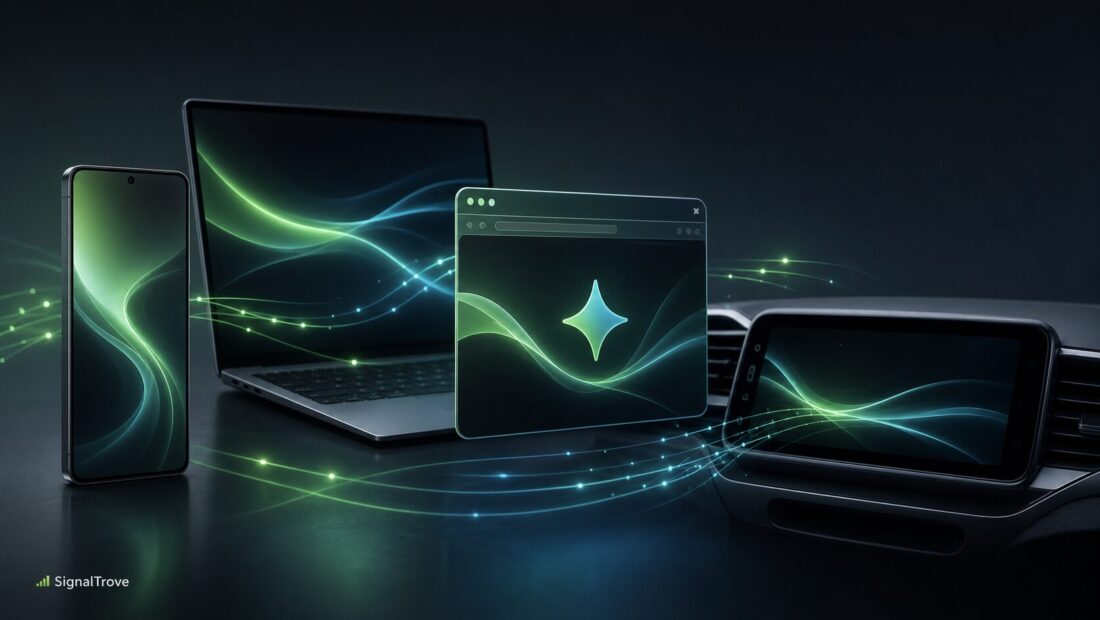
The announcements stretched across Gemini intelligence, Chrome on Android, a new Googlebook laptop category, Android in cars, Android 17 creator tools, security upgrades, emoji, developer changes and everyday feature updates. In other words, Google is trying to make Android feel less like a single-device operating system and more like a connected AI layer that follows you across screens.
That is exciting, but it also means the details matter. Some features may arrive first on specific devices, some may depend on Gemini availability, and some will only become useful once developers, car makers and hardware partners actually support them.
Quick summary
- Gemini is being pushed deeper into Android, with Google positioning it as a more useful system-level assistant.
- Chrome on Android is getting more AI features, which could make browsing feel more proactive.
- Googlebook points to a new Android-powered laptop category built around Gemini.
- Android in cars is getting a larger refresh, including more apps, better navigation, widgets, media upgrades and Gemini support.
- Android 17 is adding creator-focused tools for capture, editing and publishing workflows.
- Google also covered new daily-use Android updates, Noto 3D emoji, Pause Point and security/privacy improvements.
- For UK users, the smart move is to treat this as a direction-of-travel moment until device support and rollout dates become clearer.
The announcement map
Google’s updates break into six practical buckets. This is the fast scan before diving into the details.
Gemini layer
Android, Chrome and cars are all being pulled closer to Google’s assistant strategy.
Beyond phones
Googlebook and car updates show Android stretching further into laptops and dashboards.
Android 17
Creator tools sound useful, but device support and release timing still matter.
Chrome AI
Smarter browsing could help, as long as controls, accuracy and privacy are clear.
Security trust
More intelligence means more trust work around permissions, data and on-device protection.
Developers
The developer cut matters because app support decides which features users actually feel.
1. Gemini intelligence is moving deeper into Android
The headline update is Gemini intelligence on Android. Google is not pitching Gemini as a separate chatbot tucked away in an app. It is increasingly being framed as something that sits closer to the Android experience itself, helping across tasks, apps and devices.
That matters because assistant features become more useful when they understand context. A voice assistant that can only answer a general question is handy. An assistant that can help with what is on your screen, what you are trying to do, and where you are in a workflow is much more ambitious.
The watch-out is trust. The more useful an assistant becomes, the more sensitive the surrounding data can be. Google’s separate security and privacy posts are worth reading alongside the product announcements, because Android’s AI future only works if people feel in control of what is being processed, shared and stored.
2. Chrome AI on Android could change mobile browsing
Google also announced more AI coming to Chrome on Android. That is a big deal because Chrome is where a lot of people already research, shop, read, compare, book and generally wander around the internet pretending they are being productive.
If Chrome’s AI features help summarise pages, make sense of long articles, assist with tabs or help users act on information, that could make mobile browsing less fiddly. The question is whether it feels genuinely helpful or simply adds another layer of suggestion boxes to dismiss.
For readers, the practical advice is simple: when these features appear, check the privacy settings, look for source context, and be careful with anything that affects money, health, travel or legal decisions. AI summaries are useful, not sacred text.
3. Googlebook is Android’s laptop-shaped signal
One of the more interesting announcements is Googlebook, which Google describes as a Gemini-first laptop experience. This is not just a small accessory story. It hints at Android moving more confidently into laptop-style computing, where the lines between phone, tablet, browser and PC are getting blurrier.
The name alone will make people compare it with Chromebooks, but the more important question is what Googlebook is for. If it becomes a clean, fast, Gemini-aware laptop category with Android app support and decent battery life, it could be a compelling option for students, casual users and people who mostly live in the browser.
But there are big unknowns. We still need hardware details, UK availability, pricing, app compatibility, update commitments and how it sits next to Chromebooks. Until then, Googlebook is a strong signal rather than a buying recommendation.
4. Android in cars is becoming a bigger platform
Google’s car updates are not just about plugging your phone into the dashboard. The company highlighted changes across Android Auto and cars with Google built in, including a refreshed experience, widgets, richer navigation visuals, entertainment while parked, Dolby Atmos support in compatible cars and more Gemini in the driving experience.
This is one of the areas where Android’s cross-device strategy becomes very real. A useful car interface has to be glanceable, fast and safe. It also has to work across a messy world of different screens, car makers, phone models and regional services.
The upside is obvious: smarter navigation, better media, more useful voice control and less awkward dashboard software. The risk is feature fragmentation. What you get may depend heavily on your car, your phone, your country and whether the manufacturer keeps the software fresh.
5. Android 17 is aiming at creators
Android 17 creator features were another major part of the show. Google focused on tools that should help people capture, edit and share content more effectively from Android devices.
That is a sensible target. Phones are already the default camera for a lot of creators, journalists, small businesses and everyday social posts. Improvements to capture quality, editing flow, audio, sharing and app support can have a real impact if they reduce friction.
For UK creators, the key thing to watch is which phones get the full feature set. Android feature announcements can sound universal, then arrive in different forms across Pixel, Samsung, OnePlus and other manufacturers. The feature list matters, but the supported-device list matters more.
6. New Android updates fill in the everyday gaps
Alongside the bigger strategic announcements, Google also rounded up new Android updates for daily use. These are the changes that often matter more than the keynote headline, because they affect how the phone feels week to week.
That may include quality-of-life improvements, better device connections, updated system features and smarter ways to move between apps and screens. Not every update will be glamorous, but Android wins or loses loyalty in these small moments.
The smart read is that Google is trying to make Android feel more coherent. Phones, wearables, laptops, browsers and cars all need to feel like parts of the same system, not separate boxes with matching account logins.
7. Pause Point is a small idea with a useful message
Google’s Pause Point announcement is one of the smaller items, but it fits the wider theme: Android is not just about doing more, faster. Sometimes the platform also has to help people stop, pause or make a better decision.
That kind of feature will not sell a phone on its own. Still, it is part of a more mature operating system story. Useful tech should not only chase attention; it should also help people manage it.
The question is whether Pause Point becomes something users actually notice and trust, or another well-meaning feature that gets buried three menus deep.
8. Noto 3D emoji gives Android a little more personality
The Noto 3D emoji update is the fun one. It is not as strategically important as Gemini or Googlebook, but visual language matters. Emoji are part of how people communicate, and 3D versions can make Android feel a little more expressive and modern.
This is also a reminder that platform polish is not only about processors and models. Fonts, icons, emoji, animations and small visual touches all contribute to whether software feels alive or stale.
No, 3D emoji will not change the future of computing. But it might make the future of computing slightly less beige, and honestly, we can allow that.
9. Security and privacy are doing the heavy lifting
Google published separate Android security and privacy updates around the same announcement wave, and they are essential context. If Android is going to become more intelligent and more cross-device, the security model has to keep up.
That includes how Gemini-powered experiences handle sensitive data, how Android protects users from scams and abuse, and how people understand what is happening behind the scenes. The more personal the assistant, the more important the boundary-setting becomes.
This is where Google has to earn confidence. Useful AI features are great, but users need clear controls, transparent explanations and strong defaults. Otherwise, the clever bits become uncomfortable very quickly.
What UK Android users should watch next
Do not rush to treat every announcement as something you will have on your phone next month.
The UK questions are still practical ones: which features arrive here, which devices get them, whether they require a new phone, whether they depend on Gemini access, and whether app developers support the relevant Android 17 APIs.
If you are buying a phone soon, this announcement round should make you pay closer attention to software update promises. A cheaper phone can still be a good buy, but only if it will receive the features and security updates you care about. If you are looking at a laptop, Googlebook is one to watch, but not something to judge properly until real hardware, pricing and UK availability appear.
SignalTrove take
The Android Show: I/O Edition 2026 was not just an Android update. It was Google drawing a map of where it wants Android to live next: your phone, your browser, your laptop, your car, your creator workflow and your security layer.
That is a much bigger pitch than “new version, new features”. It is also harder to deliver. The best version of this future is genuinely useful: fewer awkward handoffs, smarter help at the right moment, better car software, stronger security and creator tools that save time.
The messy version is uneven rollouts, unclear privacy controls and features that only work properly on a narrow set of devices. The direction is interesting. The delivery will decide whether it feels like a step-change or just another very shiny Google announcement pile.
FAQ
What was The Android Show: I/O Edition 2026?
The Android Show: I/O Edition 2026 was Google’s Android-focused announcement event around Google I/O, covering Android, Gemini, Chrome, cars, security, developer tools and new platform features.
Is Android 17 officially part of these announcements?
Yes. Google covered Android 17 creator features and developer updates as part of the wider Android announcement set. Exact feature availability may depend on release timing, device support and manufacturer rollout plans.
Will all Android phones get these features?
Not necessarily. Android features often vary by device, region, manufacturer, hardware capability and app support. Pixel devices may receive some features first, while other Android brands may roll them out later or adapt them differently.
What is Googlebook?
Googlebook is Google’s newly announced Gemini-first laptop experience. The big unknowns are hardware partners, UK availability, pricing, app compatibility and how it will sit alongside Chromebooks.
Should UK users upgrade because of these announcements?
Not yet. Treat this as a roadmap signal. Wait for confirmed UK availability, supported devices and real-world reviews before buying a phone, laptop or car tech setup specifically for these features.
Sources
- Google Blog: Gemini intelligence on Android
- Google Blog: Bringing Chrome AI to Android
- Google Blog: Meet Googlebook
- Google Blog: Android in cars updates
- Google Blog: Android 17 creator features
- Google Blog: New Android updates
- Google Blog: Pause Point
- Google Blog: Noto 3D emoji
- Google Security Blog: Android Gemini intelligence security and privacy
- Android Developers Blog: The Android Show developer’s cut 2026
- Google Security Blog: What’s new in Android security and privacy 2026